


Every year, we ask the same question: what do cafe customers actually want?
Not what the industry assumes they want. Not vibes. What a proper, nationally representative survey of Australian coffee drinkers tells us.
This year, we partnered with Lightspeed Research Australia to survey 527 Australian adults who had purchased coffee out of home in the last three months. The result is the What Cafe Customers Want 2026 report.
Read on for the five key things we found:

What Cafe Customers Want 2026 (PDF)
Click the link to download the full report or watch the webinar.
Jump to a section in this article
The coffee habit is holding firm, and the mood is improving

73% of Australians are buying cafe coffee at least once a week. That number hasn't moved since 2025.
Given the cost-of-living pressure of the last two years, this surprised us. But the coffee run is one habit people aren't prepared to give up. It's affordable, social, and embedded in daily routine in a way that few other discretionary purchases are.
What has changed is the spending outlook. The number of customers who expect to spend more on out-of-home coffee in 2026 is up, rising from 21% last year to 27% this year. The number of people planning to cut back on coffee is also shrinking. Consumer sentiment has shifted.
For cafes, customer demand is still there. The question is how to capture more of it.
Most customers have a favourite cafe, but only 17% are truly exclusive.
Loyalty is complicated. When we asked customers how often they go to the same cafe, 57% said they usually go to one place but sometimes try others. Just 17% always buy from the same cafe.
This is both a challenge and an opportunity.
The challenge: even your most regular customers are not fully committed. They are habitual, not loyal — which means the relationship is softer than it might feel.
The opportunity: most customers are open to having their routine shifted. If a competitor cafe opens nearby, you could lose them. But if you give your regulars a reason to stay — consistent quality, a familiar face, a seasonal special they look forward to — you are building something stickier than convenience.
The data shows loyalty is highest among daily regulars (31% of whom always go to the same cafe) and among 35–54 year olds. These are your most valuable and most winnable regulars.
The cold drink opportunity is mainstream

Half of all Australian cafe customers say they would consider buying an iced drink at a cafe. Iced lattes and flavoured iced coffees have the broadest appeal. Frappes, iced mochas, and iced matcha over-index significantly in the under-35 demographic.
For customers under 35, iced coffee is already their third most popular regular order — sitting at 17%, behind cappuccino and latte. This is not a summer category or a novelty. It is a routine order that a large and growing part of the market has already adopted.
When we asked customers what was missing from cafe menus, cold drinks and flavoured coffees came up more frequently than anything else.
If your cold menu consists of an iced long black and a vague option to add ice to a latte, this data suggests you are leaving meaningful revenue on the table — especially with younger customers who are already your highest-frequency, highest-growth segment.
65% of your customers will try something new, if you give them a reason.

The most underused tool in a cafe's growth strategy might be the chalkboard.
65% of customers will deviate from their usual coffee order at some point. The triggers that make this happen are well understood: 49% switch because they want to treat themselves, 34% switch out of boredom with their usual, and 30% switch because they saw something promoted in-store.
Only 13% cited social media as a switching trigger — which is worth noting for operators who are spending significant time on Instagram and TikTok to drive trial. In-store promotion, it turns out, is more effective.
The practical implication is simple: what you put in front of people at the moment of decision shapes what they order. A well-placed seasonal special, a staff recommendation, a clear callout for a new menu item.
Weekly regulars, interestingly, are more likely to switch in search of something healthier or lighter (21%) compared to casual customers (5%). The people who visit most often are also the most open to being introduced to something new.
The retail coffee channel is an untapped opportunity hiding in plain sight.

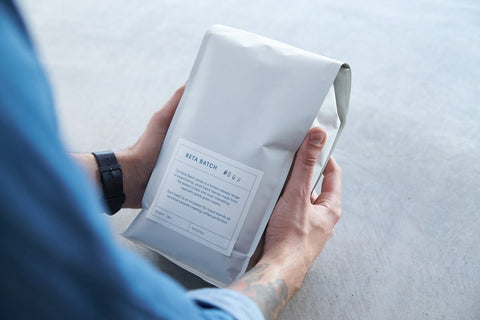
One in five Australian cafe customers already buys their home coffee from a local cafe.
That number rises to 28% for customers under 35, nearly one in three of your youngest and most frequent visitors. And for weekly regulars of all ages, it sits at 21%.
These are customers who have already decided they trust your coffee enough to take it home.
Now for the most actionable number in the whole report: 16% of customers who do not buy home coffee from a cafe said the reason was simply that they did not know cafes sold it.
Not too expensive. Not the wrong format. Just unaware.
This is not a demand problem. It is a visibility problem. A shelf with clearly labelled retail bags. A tent card on the counter. A mention at the point of sale. These are not major investments. They are reminders.
For a business where wholesale margins are typically thin and every incremental revenue channel matters, the retail opportunity is one of the most accessible available.
